Yogi Government
Yogi Adityanath Government in Uttar Pradesh
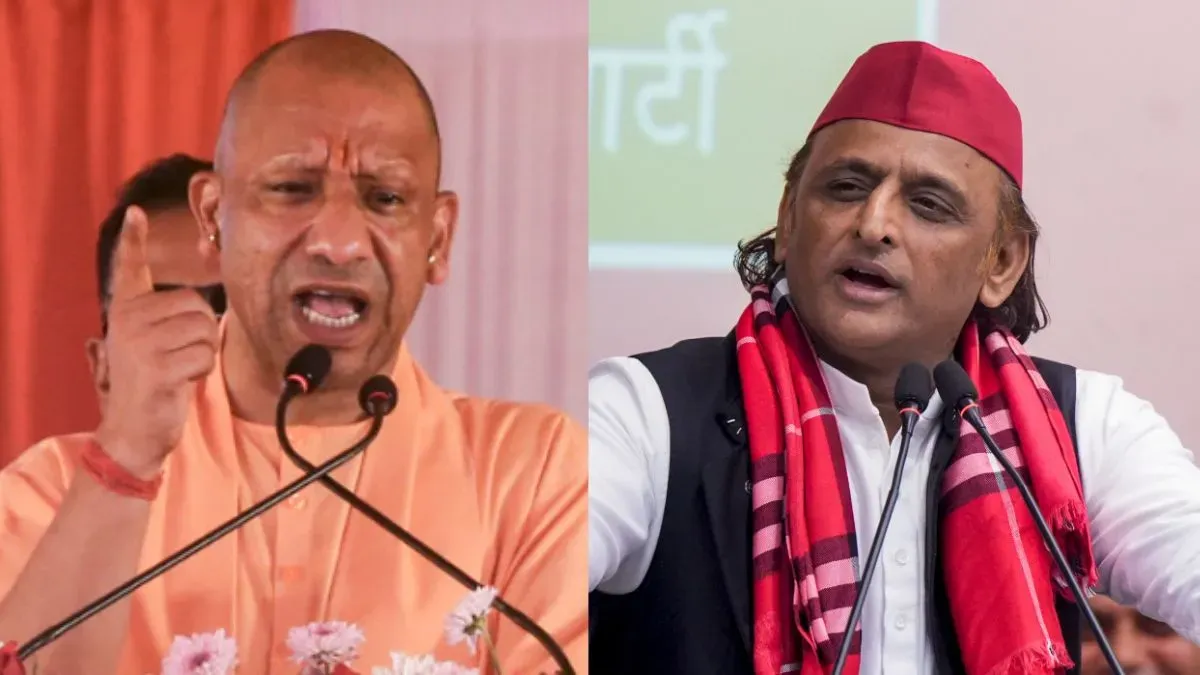
The Yogi Adityanath government is the elected state government of Uttar Pradesh, formed after the 2022 Legislative Assembly election. Yogi Adityanath began his second consecutive term as Chief Minister in March 2022.
The government's administration covers 75 districts and 403 Assembly constituencies. Its major areas of responsibility include infrastructure development, agriculture, education, healthcare, law and order, employment, industrial investment, rural development and social welfare.
This section examines the government's policies, flagship schemes, budget allocations, major projects, cabinet decisions and administrative activities.
1. Leadership of the Yogi Government
The state government operates through the Chief Minister, Council of Ministers and various government departments.
Chief Minister – Yogi Adityanath
Yogi Adityanath is the Chief Minister of Uttar Pradesh. He has led the state government since March 2017 and began his second consecutive term in March 2022.
His responsibilities include:
Leading the Council of Ministers.
Coordinating government departments.
Reviewing development projects and welfare schemes.
Presiding over cabinet meetings.
Reviewing administrative performance.
Coordinating with the Union Government.
Representing Uttar Pradesh in national and intergovernmental discussions.
Deputy Chief Ministers
The two Deputy Chief Ministers are:
Keshav Prasad Maurya
Brajesh Pathak
Council of Ministers
The Council of Ministers includes Cabinet Ministers and Ministers of State responsible for departments such as Home, Finance, Agriculture, Education, Health, Rural Development, Urban Development, Energy, Industry and Public Works.
The allocation of ministerial portfolios may change through government orders.
2. Uttar Pradesh Budget 2026–27
The state budget is an important instrument through which the government plans expenditure on public services, infrastructure, welfare programmes and development projects.
The Uttar Pradesh government presented its 2026–27 budget in February 2026.
Major Budget Figures
Budget Component2026–27Total Budget Size₹9,12,696.35 croreRevenue Expenditure₹6,64,470.55 croreCapital Expenditure₹2,48,225.80 croreCapital Outlay₹1,77,744.12 croreNew Schemes₹43,565.33 crore
The budget included provisions for infrastructure, education, agriculture, healthcare, employment and social welfare.
The government also presented a supplementary budget of approximately ₹59,019.54 crore in August 2026, with provisions for additional development and infrastructure expenditure.
Budget allocations represent planned expenditure; actual spending and completed projects should be assessed separately.
3. Infrastructure Development
Infrastructure is a major area of the government's development programme.
Expressways
Uttar Pradesh has several operational and developing expressway projects intended to connect major cities, industrial centres and regional markets.
Important projects include:
Agra–Lucknow Expressway.
Purvanchal Expressway.
Bundelkhand Expressway.
Gorakhpur Link Expressway.
Ganga Expressway.
Yamuna Expressway.
These projects are intended to improve road connectivity, reduce travel times and support logistics, industrial development and tourism.
Airports and Aviation
The government has supported airport development and regional aviation connectivity.
Major projects include:
Noida International Airport at Jewar.
Ayodhya airport.
Kushinagar airport.
Expansion and modernisation of existing airports.
Regional air connectivity initiatives.
The operational status of individual airport facilities and flight services should be checked before publishing project updates.
Metro and Urban Transport
Urban transport projects include metro services in Lucknow, Kanpur and Agra, along with regional transport and infrastructure initiatives.
The government has also focused on roads, bridges, public transport, urban drainage and municipal infrastructure.
4. Agriculture and Farmers' Welfare
Agriculture remains an important part of Uttar Pradesh's economy. Government policies cover crop production, irrigation, electricity, procurement, agricultural credit and rural development.
Free Electricity for Private Tube Wells
The state government introduced a scheme providing free electricity for eligible private tube-well connections used by agricultural consumers.
The programme is intended to reduce irrigation-related electricity expenses for eligible farmers. Its implementation depends on scheme rules and eligibility conditions.
Sugarcane Farmers
Uttar Pradesh is one of India's major sugarcane-producing states.
Government measures include:
Announcing the State Advised Price (SAP) for sugarcane.
Monitoring sugar mill payments.
Reviewing sugar mill operations.
Supporting agricultural diversification.
Encouraging modern farming practices.
Other Agricultural Initiatives
Additional areas of government support include:
PM-KISAN implementation.
Kisan Credit Card access.
Crop insurance.
Irrigation projects.
Agricultural mechanisation.
Farmer Producer Organisations.
Horticulture and dairy development.
Solar-powered irrigation.
5. Education Reforms and Government Schools
The government has introduced programmes to improve school infrastructure, teaching facilities and access to education.
Operation Kayakalp
Operation Kayakalp focuses on improving basic facilities in government primary and upper-primary schools.
Its infrastructure components include:
Functional classrooms.
Drinking water.
Separate toilets for boys and girls.
Boundary walls.
Electricity.
Handwashing facilities.
Libraries and learning resources.
Smart Schools and Digital Learning
The government has supported smart classrooms, digital learning resources and ICT facilities in schools.
These initiatives aim to improve access to technology and strengthen teaching and learning facilities.
Mukhyamantri Model Composite Schools
The 2026–27 budget announced plans for two Mukhyamantri Model Composite Schools in each of the state's 75 districts.
Mukhyamantri Abhyuday Vidyalaya
The government has also made provision for one Mukhyamantri Abhyuday Vidyalaya in every district.
Other education initiatives include scholarships, girls' education, teacher training, school infrastructure and support for higher and technical education.
6. Healthcare and Medical Infrastructure
Healthcare development includes expansion of medical colleges, government hospitals, primary healthcare centres and public health facilities.
Medical Colleges
The government has focused on expanding medical education and healthcare infrastructure across districts.
Medical college projects are intended to increase medical education capacity and improve access to specialist healthcare.
Health and Wellness Facilities
Government healthcare programmes include:
Primary Health Centres.
Community Health Centres.
District hospitals.
Medical colleges.
Health and Wellness Centres.
Maternal and child healthcare.
Immunisation programmes.
Public health awareness.
Ayushman Bharat
Eligible families can access treatment benefits under the Ayushman Bharat Pradhan Mantri Jan Arogya Yojana, subject to applicable eligibility rules.
The state also implements other health-related programmes through its medical and health departments.
7. Law and Order and Police Administration
Police administration and public safety are important responsibilities of the state government.
The Home Department coordinates police administration, internal security and law-and-order matters.
Government initiatives and administrative activities include:
Police modernisation.
Police station infrastructure.
Cybercrime investigation.
Emergency response services.
Women and child safety programmes.
Training and capacity building.
Forensic and technological facilities.
The government has also focused on strengthening coordination between police units and other law-enforcement agencies.
The assessment of crime and public safety should consider official crime statistics, reporting practices, court records and independent evidence.
8. Industrial Development and Investment
The government has promoted industrial investment, manufacturing and employment through industrial policies and infrastructure development.
Uttar Pradesh Global Investors Summit
The Global Investors Summit was organised to attract investment proposals across sectors such as manufacturing, electronics, logistics, food processing, renewable energy, information technology and defence manufacturing.
Investment proposals and memorandums of understanding should be distinguished from projects that have actually started commercial operations.
Defence Industrial Corridor
The Uttar Pradesh Defence Industrial Corridor is intended to develop defence manufacturing facilities and supporting industries.
Its nodes include:
Lucknow.
Kanpur.
Jhansi.
Agra.
Aligarh.
Chitrakoot.
MSME Development
Micro, Small and Medium Enterprises are important to Uttar Pradesh's economy.
Government initiatives include:
Financial support and credit access.
Skill development.
Industrial infrastructure.
Market access.
Support for traditional industries.
Promotion of One District One Product.
9. One District One Product (ODOP)
The One District One Product programme promotes products associated with different districts of Uttar Pradesh.
The initiative aims to support local manufacturing, traditional industries, artisans, small businesses and regional exports.
Products associated with the programme include:
Lucknow Chikankari.
Banarasi silk products.
Moradabad brassware.
Bhadohi carpets.
Kannauj perfumes.
Agra leather products.
Saharanpur woodcraft.
Firozabad glass products.
The programme includes support for product promotion, branding, training, market access and business development.
10. Women and Child Welfare
Women's safety, economic participation, health and education are important areas of government policy.
Mission Shakti
Mission Shakti focuses on women's safety, dignity, awareness and empowerment.
Its activities include:
Women's safety awareness.
Support and assistance services.
Awareness of legal rights.
Coordination with police and other departments.
Programmes addressing violence against women.
Kanya Sumangala Yojana
The Mukhyamantri Kanya Sumangala Yojana provides financial assistance to eligible families at specified stages of a girl's life, subject to scheme conditions.
Other Welfare Measures
Government programmes also cover:
Nutrition for women and children.
Anganwadi services.
Maternal healthcare.
Girls' education.
Women-focused self-help groups.
Skill development and employment support.
11. Rural Development and Housing
Rural development programmes focus on village infrastructure, housing, sanitation, employment and essential public services.
Major areas include:
Pradhan Mantri Awas Yojana
Eligible rural and urban households receive housing assistance under the respective components of the Pradhan Mantri Awas Yojana.
MGNREGA
The Mahatma Gandhi National Rural Employment Guarantee Act provides eligible rural households with a legal guarantee of wage employment, subject to the provisions of the scheme.
Village Infrastructure
Government development activities include:
Rural roads.
Drinking water facilities.
Village drainage.
Community buildings.
Sanitation.
Rural employment.
Panchayat infrastructure.
Zero Poverty Scheme
The state government has been working to identify extremely poor families and connect eligible households with basic facilities and existing welfare programmes.
12. Religious Tourism and Cultural Development
Uttar Pradesh has several major religious, historical and cultural destinations.
The government has undertaken tourism and infrastructure initiatives in locations including:
Ayodhya.
Varanasi.
Mathura-Vrindavan.
Prayagraj.
Chitrakoot.
Kushinagar.
Sarnath.
Shravasti.
Projects include roads, public facilities, visitor amenities, accommodation, transport connectivity and heritage-area development.
The government has also supported cultural programmes and tourism promotion associated with the state's historical and religious heritage.
13. Digital Governance and Public Services
The government uses online systems to improve access to public services and administrative information.
Important platforms include:
Jansunwai Portal: Allows citizens to submit and track public grievances.
UP Bhulekh: Provides online land-record information.
e-District Uttar Pradesh: Supports online applications for selected certificates and public services.
UP Government Orders: Provides access to government orders and administrative notifications through official government platforms.
Digital governance programmes also cover online payments, service applications, departmental monitoring and citizen communication.
14. Recent Cabinet Decisions – October 2026
The Uttar Pradesh Cabinet, chaired by Chief Minister Yogi Adityanath, approved several proposals on 27 October 2026.
Important decisions included:
Uttar Pradesh State Livestock Mission
The Cabinet approved the State Livestock Mission, structured around five sub-missions covering livestock entrepreneurship, breed development, poultry, innovation, digital livestock systems, fodder and research.
Cashless Medical Facilities
The Cabinet approved cashless medical treatment facilities for specified non-teaching employees and their dependent family members working in covered educational institutions and related programmes.
Inland Waterways Rules
The Cabinet approved the proposal for Uttar Pradesh Inland Vessels Rules, 2026.
These decisions are part of the government's administrative and sectoral policy programme.
15. Government Review and Development Priorities – November 2026
On 23 November 2026, Chief Minister Yogi Adityanath reviewed infrastructure, industrial development and public welfare projects at a State Transformation Commission meeting.
The review covered:
Timely completion and quality of infrastructure projects.
Industrial development and investment.
Multi-Modal Logistics Hub development in Greater Noida.
Connecting identified poor families with basic facilities.
Labour welfare services.
Road repair and pothole-free road targets.
Implementation of public welfare schemes.
The Chief Minister also directed officials to work towards completing pending projects within their prescribed timelines.
16. Challenges and Public Policy Discussions
Government programmes and policy decisions are also subject to public scrutiny and discussion.
Important issues include:
Employment opportunities and recruitment processes.
Agricultural income and sugarcane payment delays.
Quality of government schools.
Availability of doctors and healthcare facilities.
Urban pollution and waste management.
Rural drinking water and irrigation.
Land acquisition and rehabilitation.
Timely completion of infrastructure projects.
Public expenditure and departmental accountability.
Access to welfare benefits for eligible households.
Evaluating government performance requires examining budget expenditure, official data, project completion records, service delivery and the experiences of citizens.
17. Importance of the Yogi Government in Uttar Pradesh Politics
The Yogi Adityanath government is a major part of contemporary Uttar Pradesh politics. Its decisions influence the state's economic development, public administration, infrastructure, agriculture, education, healthcare and welfare programmes.
Tracking government announcements, cabinet decisions, budget allocations and implementation reports helps citizens understand how policies are designed and delivered across the state.
The government's work can be examined through official documents, legislative proceedings, departmental reports, independent assessments and public feedback.